
Bolivia Photography Tour: Andean Cloudforest and Macaw Country
Overview
This 22-day birding tour follows Bolivia from the Amazonian lowlands to the high Andes, with an optional six-day Apolo valley extension for Palkachupa Cotinga. The journey begins in Santa Cruz de la Sierra and moves through Riberalta, Trinidad, Los Volcanes, the dry valleys, Cochabamba, Inquisivi, La Paz, the Yungas and Sorata.
Along the way, the focus falls on restricted-range and endemic birds: the Critically Endangered Blue-throated Macaw in the palm savanna of Beni, the Red-fronted Macaw in the Rio Mizque valley, and the Masked Antpitta in the woodlands near Riberalta. Cloudforest, puna, dry valleys and Llanos de los Moxos wetlands give the tour its range and pace.
Photographic opportunities
This is a journey through radically different light. In the Amazonian lowlands around Riberalta, short-stature woodland and cerrado demand patient, quiet fieldcraft — working limited patches for the very localised Masked Antpitta and the retiring Ocellated Crake, with a supporting cast of tinamous, potoos, antbirds and tanagers. The Pantanal-like Llanos de los Moxos open the frame entirely: flooded grassland, palm savanna and gallery woodland where macaws cross between feeding and roosting areas, and Capybaras and other mammals are conspicuously present.
At Los Volcanes, a forested basin beneath immense red sandstone domes, dawn brings a full chorus and mixed flocks, while night sessions target owls and nightjars. The Yungas and Coroico Road offer a gradient from puna pass to subtropical forest, where mists, flowering bushes and towering epiphytes reward long lenses and patience. Dry valleys and the Rio Mizque add warm, arid tones and the rare Red-fronted Macaw.
Who this journey is for
This itinerary will appeal to birders who want to work a wide range of Bolivian habitats in a single journey — Amazonian lowlands, cerrado, Pantanal-like llanos, cloudforest, dry inter-Andean valleys and high puna — with an easy-rated pace and long days of focused birding. It suits travellers comfortable with a 22-day route and several internal flights, and those patient enough for quiet, targeted searches such as the Masked Antpitta woodlands and the Critically Endangered Blue-throated Macaw. The optional six-day Apolo extension will draw those still chasing Palkachupa Cotinga and other local specialities.
Highlights
- Cerro Tunari Specialities
- Yungas Gradient
The journey at a glance
Following the route
The journey moves gradually through 8 distinct overnight bases.
Route shown schematically for orientation.
Itinerary
Day 1
Santa Cruz de la Sierra Arrival and Overnight
Arrival in Santa Cruz de la Sierra comes with an airport transfer to your hotel, where the tour gathers in the evening. Bolivia's commercial capital serves as an easy gateway, offering more direct international connections than La Paz, with flights from the United States, Brazil and Argentina. A colonial red-tile centre meets fast-modernising glass and concrete, and the city sits where Amazonian rainforest, dry Chaco, Andean cloudforest and open savanna converge. This calm, practical first stop precedes the birding that starts the following morning.
Day 2
Savanna Birding Near Santa Cruz de la Sierra and Flight to Riberalta
Breakfast is included before a morning of birding in Cerrado-like savanna near Santa Cruz de la Sierra, where grassy plains, sand dunes, scrub, trees and pools provide habitat for the restricted-range White-bellied Nothura and the near-endemic Bolivian Slaty Antshrike. A generic lunch at a local market follows, then an afternoon flight to Riberalta in northernmost Bolivia, where the lowland phase begins with a two-night stay. The evening closes with a generic dinner.
Day 3
Masked Antpitta and Cerrado Birding from Riberalta
Starting with breakfast, the day heads into short-stature woodlands near Riberalta, where a patient search targets the localised Masked Antpitta in a poorly known area that may hold surprises. Attention then turns to the cerrado east of town, worked for the retiring Ocellated Crake, Rufous-sided Pygmy Tyrant and Black-masked Finch, while surrounding rainforest with Madeira-Tapajos affinities adds tinamous, potoos, parrots, puffbirds, woodcreepers, antbirds, fruitcrows, becards, euphonias and tanagers. Lunch in a local market and dinner follow.
Day 4
Riberalta Birding and Transition to the Llanos de los Moxos
A final morning of birding around Riberalta brings the Amazonian chapter to a close, with time in humid forest and cerrado at the Cerrado-Amazon junction before the flight south. After a market lunch, the flight from Riberalta to Trinidad opens the Beni province. On arrival, the afternoon is spent exploring the Trinidad region, a first look at the Pantanal-like Llanos de los Moxos, with seasonally flooded grassland, palm savanna and gallery woodland offering a relaxed introduction to the days ahead.
Day 5
Blue-throated Macaw Search and Trinidad Wetlands
Starting with breakfast, the route heads along Loreto Road through palm savanna and gallery woodland for a focused search for the Critically Endangered Blue-throated Macaw, where Blue-and-yellow, Red-and-green, Golden-collared and Chestnut-fronted Macaws may also appear. Trinidad Wetlands birding follows, covering marshes, oxbow lakes, open meadows and gallery woodland, with targets such as Orinoco Goose, Hudson's Black Tyrant, Plain Softtail and Fawn-breasted Wren, plus possible Capybaras. Lunch in a local market and dinner close the day.


Day 6
Birding Trinidad's Beni Floodplain Before Flying to Santa Cruz
After breakfast, birding around Trinidad explores Beni floodplain habitats like marshes, oxbow lakes, meadows and pastures, targeting Orinoco Goose, Hudson's Black Tyrant and possibly Chaco Eagle, plus gallery woodland species such as Plain Softtail, Fawn-breasted Wren, Unicoloured Thrush, Velvet-fronted Grackle and Sulphur-bellied Tyrant-Manakin. A local market lunch precedes the flight from Trinidad to Santa Cruz de la Sierra, closing the Llanos de los Moxos leg, followed by dinner.
Day 7
Cloudforest Birding at Refugio Los Volcanes
An early road transfer climbs into the Andean foothills toward Refugio Los Volcanes, an ecolodge near Samaipata set among towering red cliffs beside Amboró National Park. After breakfast, most of the day is given to cloudforest birding on arrival, adding a first afternoon in the forested basin beneath immense red sandstone sugarloaf domes. Near-endemics and mixed flocks offer a taste of what the following day holds, and the secluded wilderness trails make for a calm introduction to the Andes.
Day 8
Birding Trails and Night Forests at Refugio Los Volcanes
Breakfast precedes a morning on the Refugio Los Volcanes birding trails, where the dawn chorus may reveal Gray-throated Leaftosser, Rufescent Screech-Owl, Dusky-green Oropendola, Yungas Manakin, Ochre-cheeked Spinetail, Guira Tanager and possibly the endemic Bolivian Recurvebill. The entrance road offers easier walking and sightings such as Amazonian Motmot, while deeper trails into Amboró National Park pass steep forested slopes, a waterfall and chances for plants, lizards, Tapirs or monkeys. Lunch and dinner are taken locally, followed by night birding around Los Volcanes for Band-bellied Owl, Rufous Nightjar and Ocellated Poorwill.


Day 9
Crater Lake Birding en Route to Samaipata
After breakfast, the road transfer from Los Volcanes climbs from sandstone domes into higher-elevation forest, targeting the elusive Short-tailed Antthrush before reaching a crater lake ringed with dense reed beds, where Masked Duck family parties and Least and Pied-billed Grebes are often present. The route continues through a picturesque Andean farming valley, with cultivated and fallow fields, scrub and deciduous woodland where rare Mitred Parakeets move through cornfield country. Lunch is a generic local market stop, followed by dinner, before the overnight stay in Samaipata.
Day 10
Podocarpus Forest Birding and the Drive to Saipina
Birding begins in a remnant Podocarpus forest, a stronghold for the rare Tucuman Amazon and Red-faced Guan. After breakfast and a market lunch, the route continues from Samaipata toward Saipina, crossing into the Rio Mizque floodplain. The transfer itself is rewarding, with open scrubby hills offering chances at Olive-crowned Crescentchest, Bolivian Warbling Finch and Huayco Tinamou, while Dot-fronted Woodpecker and Giant Antshrike are sought in the valley. Andean Condors often soar overhead. The night is spent around Saipina.
Day 11
Red-fronted Macaw Reserve and Comarapa Journey
Breakfast is included before visiting the Red-fronted Macaw Reserve in the Rio Mizque valley, where the rare Bolivian endemic Red-fronted Macaw crosses between feeding and roosting areas and the endemic Cliff Parakeet also lives. A generic lunch at a local market precedes the transfer to Comarapa, a provincial town beneath the Siberia massif with a balmy inter-montane climate and easy access to Amboro National Park cloudforests; arrival may allow initial exploration. A generic dinner follows.
Day 12
Comarapa, Tambo Canyons and Siberia Cloudforest Birding
Breakfast is followed by birding through the red and orange canyons around Comarapa and Tambo Canyons, where cactus-covered hillsides hold the endemic Bolivian Earthcreeper, before an evening search for Scissor-tailed Nightjar and Tropical Screech Owl. A market lunch precedes the climb to Siberia Cloudforest in Amboro National Park, a high ridge of epiphyte-laden trees above bamboo, where mornings offer clear views and afternoons bring mist. The undergrowth echoes with Rufous-faced Antpitta and Trilling Tapaculo, flowering bushes draw Violet-throated Starfrontlet and Tyrian Metaltail, and the descent adds Grey-bellied Flowerpiercer and Red-tailed Comet. Dinner closes the day.
Day 13
Siberia Watershed Birding en Route to Cochabamba
After breakfast, a long drive from Comarapa to Cochabamba crosses the Siberia watershed into dry valleys, with birding stops along the way. The route focuses on Polylepis gullies, where searches may reveal the endemic Black-hooded Sunbeam, Wedge-tailed Hillstar and Rufous-bellied Mountain Tanager. A generic lunch in a local market and a generic dinner round out the journey. The day combines scenic travel with targeted birding before arriving in Cochabamba.
Day 14
Quillacolla Road and Chapare Birding from Cochabamba
Birding along the Quillacolla Road climbs past Cerro Tunari toward a 4000m pass, where targets include the endemic Cochabamba Mountain Finch, Giant Conebill, Wedge-tailed Hillstar and high-Andean boulder-field species. The Chapare Road then descends from puna through elfin, temperate and subtropical forest toward Villa Tunari, seeking Hooded Mountain Toucan, Upland Antshrike and Yungas Tody-Tyrant. Breakfast is included, with a generic lunch at a local market and a generic dinner available.
Day 15
Quillacolla Road and Chapare Birding
Birding along the Quillacolla Road climbs past Cerro Tunari to a 4000m pass, seeking the endemic Cochabamba Mountain Finch, Giant Conebill, Wedge-tailed Hillstar and high-Andean boulder-field species. A market lunch breaks the day. The Chapare Road then rises from the Cochabamba valley across puna before descending through elfin, temperate and subtropical forest toward Villa Tunari, targeting Hooded Mountain Toucan, Upland Antshrike and Yungas Tody-Tyrant. Breakfast and dinner are included or arranged separately.
Day 16
Quillacolla Road and Chapare Birding
Birding along the Quillacolla Road climbs past Cerro Tunari to a high pass, where Cochabamba Mountain Finch, Giant Conebill and Wedge-tailed Hillstar are sought among boulder-field species. A market lunch precedes the Chapare Road, which rises from puna and descends through elfin, temperate and subtropical forest toward Villa Tunari, targeting Hooded Mountain Toucan, Upland Antshrike and Yungas Tody-Tyrant. Breakfast and dinner are included or arranged separately as noted.
Day 17
Cochabamba Eucalyptus Birding and Transfer to Inquisivi
An early outing near Cochabamba targets the endemic Bolivian Blackbird, typically found singing in introduced eucalyptus trees, along with the range-restricted Brown-backed Mockingbird. Breakfast is included before the road transfer from Cochabamba to Inquisivi, crossing puna habitat with stops for Ornate Tinamou, White-winged Cinclodes, Plain-mantled Tit-Spinetail, Cordilleran Canastero and Puna Yellow Finch. Lunch is taken at a local market, and dinner closes the day.
Day 18
Inquisivi Dry Forest and Return to La Paz
Breakfast is included before searching Inquisivi's dry forest, one of few remaining sites for the Critically Endangered Bolivian Spinetail, with a newly described Green-cheeked Parakeet form, dry-country woodland birds, and another chance at Black-hooded Sunbeam. A generic lunch in a local market follows, then the road transfer from Inquisivi to La Paz, with puna stops en route for canasteros, miners, ground tyrants and yellow finches, closing the high-country birding before the tour turns toward the Yungas. Arrival frames La Paz, the highest capital city on earth, in its amphitheatre beneath Mount Illimani. Dinner is generic.
Day 19
Coroico Road Birding from La Paz
After breakfast, travel from La Paz to Coroico along the Coroico Road, descending from a high puna pass into cloudforest and on to subtropical forest. Birding along this Yungas gradient focuses on the region's specialities, with stops through changing habitat. Lunch is a generic local market meal, and dinner is included separately. The route pairs the dramatic descent with focused birding before arriving in Coroico.
Day 20
Birding the Coroico Road through the Yungas
Birding along the Coroico Road follows the Yungas gradient, descending from a high puna pass into cloudforest and lush subtropical forest while revisiting Yungas specialities. Breakfast is included, with a generic lunch at a local market and a generic dinner available at additional cost. This route through the Coroico Road landscape blends high-altitude and lowland habitats, making it a memorable stretch of birding and scenery.
Day 21
Coroico Road Birding en Route to Sorata
Breakfast is included before another morning along the Coroico Road, working the middle-elevation Yungas forest for Diademed Tapaculo, Scimitar-winged Piha and other pass specialities. This second chance at the habitat rewards patience and helps fill gaps in the list. A generic lunch in a local market follows, then the drive returns through La Paz and continues to Sorata at the base of the Illampa mountains. Dinner is generic, and the night is spent in Sorata.
Day 22
Birding Sorata's Dry Valley and Lake Titicaca Before La Paz
After breakfast, search the dry valley beneath the Illampa mountains for the localised Berlepsch’s Canastero, whose large stick nests are conspicuous in taller eucalyptus, with a high-altitude lake adding Giant Coot and Silvery Grebe. At Lake Titicaca, scan the reed edges for Titicaca (Short-winged) Grebe alongside Andean Goose, Crested Duck, Plumbeous Rail and other high-Andean waterbirds, with Puna Snipe a fortunate possibility. A generic lunch in a local market is available, then drive from Sorata and Lake Titicaca to La Paz airport for a late afternoon departure.


Accommodation
Where you’ll stay

Price details
Price per person
2 personnes
Per person
3 à 4 personnes
Per person
5 à 6 personnes
Per person
7 à 8 personnes
Per person
9 à 10 personnes
Per person
11+ personnes
Per person
Prices are per person and based on twin share, unless stated otherwise.
Additional costs
Deposit
30% deposit (629 EUR approx.)
What is included
Included
- Hébergement tout au long du voyage
- Repas indiqués dans le programme
- Transport pendant l'itinéraire
- Assistance à la planification avant le voyage
Not included
- Déjeuner le jour de l'arrivée
- Pourboires
- Vols internationaux
- Assurance voyage, médicale et annulation
- Boissons et repas supplémentaires
- Dépenses non spécifiées dans le programme
- Équipement photo
From past travellers
A few kind words
Le circuit magique et mystérieux !
En mars 2026, je suis sorti de ma zone de confort et j’ai réservé un Voyage Photo de 11 jours avec Tristan, par l’intermédiaire d’Expéditions Lointaines.
Ce fut remarquable. En pleine zone reculée, nous avons visité plusieurs communautés autochtones de la Sierra Nevada, d’abord pour les rencontrer et découvrir un peu leur mode de vie, puis pour les photographier. Nous avons aussi eu plusieurs occasions de photographier des oiseaux, des paysages et des scènes urbaines à Carthagène.
Nous avons eu la chance de n’être qu’un petit groupe de deux, ce pour quoi j’étais plus que disposé à payer un supplément. Cela nous a donné une expérience intime avec les personnes rencontrées en chemin, et l’attention individuelle portée à nos intérêts personnels en photographie était remarquable.
Tristan a été une très belle rencontre ! Il a passé ces dix dernières années à vivre dans cette région de Colombie et à l’explorer. Il a noué des relations avec les peuples autochtones de la région et aime partager avec vous sa compréhension de leur culture.
Il a parfaitement structuré le circuit. Il était organisé, compétent (sur le territoire, ses habitants et la photographie), compatissant, passionné et désireux de partager avec vous son vaste savoir encyclopédique. Quand il ne savait pas, il vous trouvait rapidement l’information.
Les endroits reculés où vous vous rendez, en 4x4, en randonnée et en bateau, sont exceptionnels. Vous ne pourriez jamais trouver ces endroits par vous-même.
Connaissant peu la Colombie, j’ai d’abord un peu hésité à faire ce circuit. Maintenant que je viens de rentrer, je n’hésiterais pas une nanoseconde.
Quel que soit le type de circuit que vous ferez avec Tristan, vous ne serez pas déçu. Il a tenu tout ce qu’il avait promis, et même quelques belles surprises en plus.
Un voyage magique dans une Colombie méconnue
Je n'arrive pas à croire à quel point j'ai de la chance d'avoir découvert Expéditions Lointaines, avec Tristan comme guide touristique et photographe de talent, qui nous fait partager sa vision de la Colombie à travers son objectif.
Tristan est un guide remarquable. Fiable, organisé, prévenant et expérimenté. Il a vraiment su choisir le meilleur de ce que propose ce circuit de Colombie, en grande partie dans des régions reculées. Il a noué des liens solides avec les habitants de villages reculés et trouvé des moyens de mettre en lumière leurs spécificités culturelles. La danse, le chant et la cuisine se sont associés pour créer de belles occasions de photographier.
Dans le pays de Gabriel García Márquez, on peut ressentir l'énergie, vivre la culture et rapporter chez soi des photographies fortes qui captent ces moments.
Si la Colombie figure sur votre liste de destinations à photographier, Tristan est le guide qu'il vous faut. Je le recommande, ainsi que son circuit soigneusement conçu, sans la moindre hésitation.
Notre deuxième voyage inoubliable avec Tristan
Notre deuxième voyage sur mesure avec mon mari et notre ami Tristan, qui sait toujours rendre le voyage agréable grâce à son approche simple et à sa touche personnelle qui apporte ce petit plus !
Tristan est très calme, joyeux et toujours compréhensif face à nos attentes !
Notre premier voyage en Patagonie a été exceptionnel, et en septembre nous partons à Madère, un voyage qui sera complètement différent, mais aussi très agréable.
Merci, Tristan.
Jamais deux sans trois 😉
Pourquoi voyager avec nous ?
Guides experts et de confiance
Nous travaillons avec des guides locaux soigneusement sélectionnés pour leur expérience, leur connaissance de la faune et leur capacité à trouver des rencontres uniques de manière éthique et sécuritaire.
Hébergements soigneusement sélectionnés
Nous choisissons chaque hébergement pour trouver l'équilibre parfait entre confort, emplacement et accès à la faune, afin que vous puissiez profiter au maximum de chaque instant de votre voyage.
Des horaires conçus pour la meilleure lumière
Nous organisons des activités et des sorties à des moments clés de la journée pour profiter des meilleures conditions de lumière et augmenter les possibilités d'observation et de photographie de la faune.
Vous rentrerez chez vous avec des photographies incroyables.
Nous concevons chaque expédition pour maximiser les opportunités d'observation et vous aider à profiter de rencontres uniques et à prendre les meilleures photographies possibles dans la nature.
À propos de votre guide
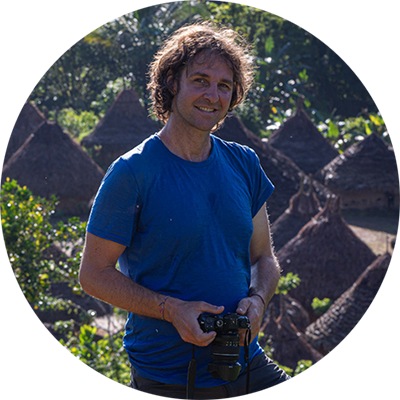
Tristan Quevilly
À la tête de Remote Expeditions, Tristan combine avec habileté exploration, photographie, conception de circuits, développement web et direction de circuits, incarnant l'essence d'un entrepreneur de voyage polyvalent. Sa mission est d'offrir un nombre limité de circuits de haute qualité chaque année, garantissant une expérience de voyage inégalée, loin du tourisme de masse. Il vise à vous guider vers la véritable essence de chaque destination, favorisant une connexion profonde avec la nature et avec vous-même.
Questions fréquentes
Pour confirmer votre place, nous demandons un premier paiement de 50 % du prix total du voyage. Les 50 % restants peuvent être payés jusqu'à 3 mois avant la date de départ.
Nous acceptons les paiements en euros et en dollars américains par virement bancaire. Une fois votre réservation effectuée, nous vous enverrons toutes les informations et détails nécessaires pour effectuer le paiement.
Non, toute personne qui aime la nature est la bienvenue. Nous recommandons toujours d'apporter des jumelles pour profiter d'une vue plus rapprochée, et si vous avez un appareil photo, vous capturerez sûrement d'excellentes images aussi.
Vous pouvez trouver tous les détails concernant les annulations, les remboursements et les conditions de réservation sur notre page : Conditions générales.
Non. Nos voyages sont conçus à la fois pour les personnes ayant de l'expérience en photographie et en observation de la faune, et pour les voyageurs qui apprécient simplement la nature et souhaitent vivre une expérience différente.
Le plus important est d'avoir de l'intérêt, de la curiosité et un désir de profiter de l'environnement et des animaux.
Oui. Si vous souhaitez arriver plus tôt ou prolonger votre séjour, nous pouvons organiser des nuits d'hébergement supplémentaires, des activités et des transferts. Faites-nous simplement part de vos projets et nous ajusterons l'itinéraire selon vos préférences.
Oui, bien sûr. Beaucoup de nos voyageurs participent aux expéditions seuls. Nos groupes rassemblent généralement des personnes partageant les mêmes intérêts pour la faune, la photographie et la nature, donc l'atmosphère a tendance à être très amicale et il est facile de se connecter avec d'autres voyageurs.
Start a conversation
Ask about this tour
Tell me what you would like to photograph, your preferred dates, and any questions about the journey.
- Dates flexibles et itinéraires personnalisés disponibles.
- Réponse garantie sous 24 heures
- Aucun paiement requis pour personnaliser un itinéraire


