
Ecuador Photography Tour: Chocó Cloud Forest to Amazon Lowlands
Overview
Ecuador compresses three worlds into one 18-day west-to-east crossing. From Quito at 2,800 m, the route drops into the montane Chocó — Tandayapa, Mindo and Mashpi — where hides, feeders and hummingbird gardens keep the photography moving through the day. It then climbs to Antisana's páramo for Andean Condors, descends the eastern slope through San Isidro's cloud forest, crosses the Sumaco foothills, and reaches the Amazon lowlands: the Napo River, Sani community territory and the edge of Yasuní National Park at 250 m.
Habitat blocks are linked by short lodge hops, so light, landscape and wildlife stay the constant subjects.
Photographic opportunities
This is a route built around light, habitat and access. In the montane Chocó, feeders at Alambi, Bellavista and Mashpi bring hummingbirds close and unhurried, while hides at the Chocó Bird Reserve and San Tadeo let toucans, tanagers, barbets and warblers fill the frame. At Paz de las Aves the morning is spent at the Andean Cock-of-the-Rock arena, then on the trails with Giant, Yellow-breasted and Moustached Antpittas. Milpe offers manakin leks and mega-flocks; WildSumaco works road edges, forest trails and platforms. On the high Andes, Antisana's condor walls are scanned with telescopes and the páramo at almost 4,000 m demands patience. San Isidro's hide, feeders and the Yanayacu caterpillars add macro work, and after dark there is the Choliba owl search. In Amazonia, clay licks, the 35 m canopy tower, varzea and terra firme trails, river islands, blackwater channels and a torchlight paddle widen the range of subjects and light.
Who this journey is for
This itinerary will appeal to photographers who want to work across three of Ecuador's bird worlds in a single 18-day circuit: the montane Chocó, the high Andes and the Amazonian lowlands. The physical level is easy, and the rhythm is deliberately built around short lodge hops, with two long transfer days (Days 11 and 13) sitting between the habitat blocks. Hides, feeders, observation towers and gardens appear at nearly every stop, so observation continues through lunches, lodge mornings and rest hours rather than depending on luck. Days on foot at altitude, from Quito at 2,800 m to Papallacta Pass above 4,000 m, suit those comfortable working in changeable mountain weather.
Inspiration
Expedition highlights

The journey at a glance
Following the route
The journey moves gradually through 8 distinct overnight bases.
Route shown schematically for orientation.
Itinerary
Day 1
Arrival in Quito and the Inter-Andean Valley (Tababela)
Landing at Mariscal Sucre International Airport, a private transfer carries you to Tababela in the inter-Andean valley, a short ride ending at a hacienda-style lodge. After settling in, an unhurried stroll through the Zaysant Ecolodge grounds offers a first taste of Ecuador's birds, including Sparkling Violetear, Black-tailed Trainbearer, Great Thrush, Saffron Finch and Blue-and-yellow Tanager. A tour orientation covers the itinerary ahead, from the Chocó cloud forests to the Amazon headwaters. Dinner is open, with an early night before departing into the western Andes.
Day 2
Quito to the Tandayapa Valley
Leaving Quito, the route winds west down the Andean foothills into the montane Chocó toward the Tandayapa Valley. At the valley entrance, Alambi Hummingbird Feeders at Alambi Reserve allow close, unhurried observation of hummingbirds among flowering vegetation, with lunch served facing the feeders. The afternoon continues climbing through cloud forest to Bellavista Lodge at 2,200 m, where lodge feeders attract further hummingbird species and forest trails offer a first sense of the montane Chocó, followed by dinner as night settles over the surroundings.


Day 3
Tandayapa Cloud Forest Trails and Bellavista Lodge
Walking the primary montane Chocó forest near Tandayapa Cloud Forest, the day unfolds on reserve trails that thread the understory at roughly 2,100 m. Road edges offer chances to track mixed-species flocks, the local rondas, and to observe their movement. Back at Bellavista Lodge, hummingbird feeders extend the experience, with possible views of montane Chocó endemics. Breakfast is included, and dinner is served at the lodge as the forest darkens.
Day 4
Chocó Bird Reserve, San Tadeo and the Mindo Valley Heights
Breakfast precedes a morning among the hides of the Chocó Bird Reserve, high in the Tandayapa Valley, where toucans, tanagers, hummingbirds, barbets and warblers approach the feeding areas. The afternoon shifts to the San Tadeo Reserve hides, with tanagers and other passerines filling the frames; weather and species movement shape the order of visits. A short transfer climbs to the Mindo Valley heights, settling in at Sachatamia Lodge for dinner and the night, the base for the next morning's descent to Paz de las Aves.
Day 5
Paz de las Aves, Pedro Vicente Maldonado and Mashpi
At Paz de las Aves, an early breakfast precedes time at the Andean Cock-of-the-Rock lek, where the courtship display can be photographed, before owner Ángel guides the group to see Giant, Yellow-breasted and Moustached antpittas. Lunch follows, then a Fruttitour photo blind near Pedro Vicente Maldonado offers patient observation of lowland Chocó species, with Choco Toucan, Pale-mandibled Aracari, Red-headed Barbet and Club-winged Manakin among possible visitors. An evening transfer reaches a lodge in the Mashpi Valley, dinner is served there, and two nights at the Mashpi Amagusa Reserve provide a base for exploring this birding area.
Day 6
Mashpi Amagusa Reserve with the Reserve Owner
Spend a full day exploring Mashpi Amagusa Reserve, a mixed protection zone set at roughly 1,400 m where original vegetation and lowland Chocó-like climate create a crossroads of lowland and montane bird assemblages. Accompanied by the reserve's owner, follow his local knowledge to seek flagship species such as fruiteaters, solitaires, Long-wattled Umbrellabird, Moss-backed Tanager and Choco Vireo. Breakfast is included, and dinner is served at the Mashpi Amagusa Reserve Lodge, based in the Mashpi Valley for two nights.
Day 7
Mashpi Feeders, Milpe Bird Sanctuary and the Climb to Antisana
Start among the Mashpi-Amagusa Reserve feeders, where quiet patience draws out understory Choco endemics. A mid-morning transfer then drops to the Milpe Bird Sanctuary, whose trails pass manakin leks and frequent mega-flocks, while hummingbird, tanager and toucan feeders keep activity high. Late afternoon brings a crossing of the inter-Andean valley, leaving cloud forest behind for open high Andes. Dinner and the night are at Tambo Condor, a standard hacienda at 3,500 m in the Antisana area, positioned for the Antisanilla Reserve the following morning.


Day 8
Antisana Condors, Páramo and Papallacta
A morning drive into the Antisana Ecological Reserve reaches an observation platform, where telescopes scan the condor nesting walls of one of Ecuador's key Andean Condor populations. The route then moves through scrubby high-altitude vegetation for hummingbirds and high-Andean passerines, climbing toward the páramo near 4,000 m, with a short walk along La Mica lagoon adding waterbirds. After descending for lunch around hummingbird feeders, the group tries for Spectacled Bear at the lower feeders, a possibility rather than a promise. The afternoon continues to Papallacta, where dinner is open and hot springs offer a natural close.
Day 9
Papallacta Pass Birding and the Eastern Slope to San Isidro
After breakfast, the morning at Papallacta Pass offers a choice: the thermal complex or the super-humid páramo of Cayambe-Coca reserve, searching above 4,000 m for Ecuador's high-altitude species across temperate forest, lagoons, elfin scrub and Polylepis woodland, weather permitting up to the antennas above 4,300 m. Lunch follows at the Guango reserve's hummingbird garden on the eastern slope. The afternoon descent crosses elfin, high-Andean and cloud forest to San Isidro Lodge, home for two nights with hide and feeders, where dinner is served.
Day 10
San Isidro Cloud Forest and the Yanayacu Station
Breakfast precedes a day exploring the mist-wrapped cloud forest around San Isidro, where humidity nurtures epiphytes, mosses, orchids, bromeliads and cacti, along with frogs, birds and small mammals; the forest sets the pace. In the afternoon, a visit to the Yanayacu scientific station includes a researcher's presentation on Ecuadorian bird reproductive biology and caterpillar parasite studies, with the caterpillars becoming an unexpected macro-photography subject. Dinner follows at San Isidro Lodge, home for two nights on the eastern slope of the Andes, then an after-dinner attempt to observe a Choliba-group owl possibly new to science.
Day 11
San Isidro Hide Morning and Transfer to WildSumaco Lodge
Starting at the San Isidro hummingbird garden, the lower hide is used from first light through much of the morning for observing and photographing birds, with time at the feeders afterward. A long transfer then crosses the inter-Andean valley, climbs Papallacta Pass and drops into the high Amazon, arriving at WildSumaco Lodge in the buffer zone of Sumaco National Park, where subtropical forest sits at 1,500 m. Dinner follows at the lodge, the base for two nights.


Day 12
WildSumaco Wildlife Sanctuary: Trails, Creeks and Observation Platforms
Breakfast precedes a full day at WildSumaco Wildlife Sanctuary, a lesser-known reserve where Amazonian piedmont meets the high Andes and where conservation and research have recorded many usually rare species. Explore road edges, humid subtropical forest trails and forest creeks, then spend time at the feeding areas and observation platforms facing the lodge. Dinner follows at WildSumaco Lodge, kept for two nights at 1,500 m within the buffer zone of Sumaco National Park amid full subtropical Amazonian forest.
Day 13
Napo River Journey to Sani Lodge in Yasuní
Breakfast precedes the road transfer from WildSumaco descending to Coca, the Napo province departure point, with a boxed lunch fitted around the schedule. From Coca's docks, a motorized pirogue travels roughly three hours down the Napo River, Ecuador's largest Amazon tributary, its silt-laden white-water colour marking the Andean origins. Near Yasuní National Park within Sani community territory, paddle canoes take over through narrow blackwater channels, their tannin-dark tea waters leading to the lagoon at 250 m. Check-in at Sani Lodge follows, with dinner closing the travel day ahead of four nights in Amazon forest.
Day 14
Clay Licks, Terra Firme and the Two Waters of the Napo
After breakfast, a paddle canoe and motorized pirogue carry the group from the lagoon to the Napo River banks. At the Añangu clay licks, parrot species gather at an open riverbank saladero and a cave-like forest saladero to ingest mineral-rich clay. A terra firme trail near the second lick explores never-flooded forest. Lunch at Sani Lodge precedes an afternoon motorized-pirogue birding run on the white-water Napo, seeking riverine species. The return follows blackwater channels back to Sani Lodge, where dinner closes the day.
Day 15
Canopy Tower, Varzea and a Torchlight Paddle
Breakfast at Sani Lodge precedes a lagoon crossing and a short forest walk to the Amazon Canopy Tower, perched roughly 35 m up a Kapok tree, where the unobstructed view brings high-flying canopy birds within easier reach. Mid-morning turns to a long Varzea Walk through seasonally flooded forest, an ecosystem with avifauna distinct from terra firme. A late-afternoon trail weaves between varzea and terra firme, packing variety into a short distance. After dinner, a torchlight night paddle searches dark channels for black caimans and nocturnal wildlife.


Day 16
Napo Vegetation Islands and a Final Choice at Sani Lodge
The morning is spent exploring the Napo River vegetation islands, self-contained ecosystems that develop independently and, depending on age, height and vegetation cover, support specialized species. The group visits several islands of differing structure. After returning during the hottest hours, the final outing is decided with your guide, whether late-day canopy observation from the tower, a terra firme or varzea trail, or paddling the lagoon edges and blackwater channels. Dinner at Sani Lodge precedes a last night walk along the trails for nocturnal avifauna.
Day 17
Departing the Amazon: Dawn Paddle, Napo River and Flight to Quito
A dawn paddle carries the canoes back out through the blackwater channels toward the Napo River, then a motorized pirogue continues upstream past the national park limit, reaching Coca around midday. A boxed lunch covers the journey before the flight from Coca to Quito lifts out of the Amazon basin and across the Andes. On arrival, a transfer with French-speaking assistance leads to La Casona de la Ronda Boutique Hotel in the old town. Dinner is not included, leaving the evening free among Quito's colonial streets.
Day 18
Colonial Quito and Departure
A guided walk through Colonial and Historic Quito reveals republican history, cultural mestizaje, ancient quarters and colonial culture, passing the Plaza de la Independencia and Plaza Santo Domingo. The story recalls Alexander von Humboldt and Aimé Bonpland arriving in early January 1802, making Quito their base for exploring the Andes. After breakfast, an early afternoon transfer reaches Quito Airport, where the journey ends and you are dropped off for your flight home.
Accommodation
Where you’ll stay


Price details
Price per person
2 people
Per person
3 to 4 people
Per person
5 to 6 people
Per person
7 to 8 people
Per person
9 to 10 people
Per person
11+ people
Per person
Prices are per person and based on twin share, unless stated otherwise.
Additional costs
Deposit
30% deposit (2,489 USD approx.)
What is included
Included
- Accommodation throughout the journey
- Meals indicated in the programme
- Transportation during the itinerary
- Pre-trip planning assistance
Not included
- Lunch on arrival day and departure day
- Tips
- International flights
- Travel, Medical & Cancellation insurance
- Additional drinks and meals
- Expenses not specified in the programme
- Camera equipment
From past travellers
A few kind words
Excellent Travel & Photography Guide
Tristan created a wonderful cultural experience for us over a 10 day visit to Cuba. From a photography perspective, he had researched people and locations to insure the best model, in the most cuban environment in the best light. Although we were focused on photography, he rounded out the tour with opportunities to experience the history (visit to old sugar plantation), the land (visit to a farm with oxen and a hike to waterfall), and the food (experiencing local food and drink in beautiful settings). I would highly recommend Tristan as a guide. We are already planning our next trip with him.
Beautiful discovery of southern Colombia
Wonderful discovery of southern Colombia. Excellent organization, and Tristan is an outstanding guide who shares his love for the country.
Thank you, Tristan, for this new experience by your side
Thank you, Tristan, for this new experience by your side. Cuba is truly a world of its own that is worth discovering. Thank you for all the wonderful encounters, for your patience, and for the valuable advice :-)
Traveling with you is always the best.
Hope to see you very soon.
Why travel with us?
Expert, trusted guides
We work with carefully selected local guides chosen for their experience, knowledge of wildlife, and ability to find unique encounters ethically and safely.
Carefully selected accommodations
We choose each accommodation to find the perfect balance between comfort, location, and access to wildlife, so you can make the most of every moment of your journey.
Schedules designed for the best light
We organize activities and outings at key times of day to take advantage of the best light conditions and increase opportunities for wildlife viewing and photography.
You’ll come home with incredible photographs
We design each expedition to maximize opportunities for observation and help you enjoy unique encounters and capture the best photographs possible in the wild.
About your guide
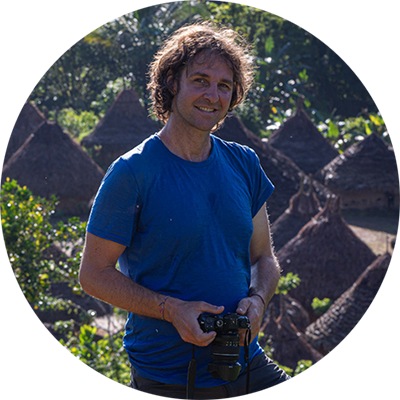
Tristan Quevilly
At the helm of Remote Expeditions, Tristan adeptly combines exploration, photography, tour design, web development, and tour leadership, encapsulating the essence of a versatile travel entrepreneur. His mission is to offer a limited number of high-quality tours each year, ensuring an unparalleled travel experience steering clear of mass tourism. He aims to guide you towards the true essence of each destination, facilitating a deep connection with both nature and yourself.
Frequently Asked Questions
To confirm your spot we request a first payment of 50% of the total trip price. The remaining 50% can be paid up to 3 months before the departure date.
We accept payments in euros and US dollars via bank transfer. Once your booking is made, we will send you all the information and details needed to make the payment.
No, anyone who loves nature is welcome. We always recommend bringing binoculars to enjoy a closer view, and if you have a camera you'll surely capture excellent images too.
You can find all the details about cancellations, refunds and booking conditions on our page: Terms and Conditions.
No. Our trips are designed both for people with experience in photography and wildlife watching and for travelers who simply enjoy nature and want to live a different experience.
The most important thing is to have interest, curiosity and a desire to enjoy the environment and the animals.
Yes. If you wish to arrive earlier or extend your stay, we can arrange additional nights of accommodation, activities and transfers. Just let us know your plans and we'll adjust the itinerary to your preferences.
Yes, of course. Many of our travelers join the expeditions on their own. Our groups usually bring together people with similar interests in wildlife, photography and nature, so the atmosphere tends to be very friendly and it's easy to connect with other travelers.
Start a conversation
Ask about this tour
Tell me what you would like to photograph, your preferred dates, and any questions about the journey.
- Flexible dates and custom itineraries available
- Response within 24 hours guaranteed
- No payment required to customize an itinerary


